How I Made My First $1,000 in a Month From My Travel Blog
There's a moment every blogger quietly hopes for: the first month where the income from your blog feels... real. Actually real — as in, this thing I've been building on trains and planes and co-working spaces and between my day-job might actually be a legitimate income stream.
I’ve had this moment only after years of working on my blog - to be quite honest, it takes a tremendous amount of dedication and consistency to build a solid income from a blog. But it is definitely possible! As long as you love writing, sharing and creating then it is a rewarding journey in my opinion.
In this blog post, I want to dive specifically into how I got my first $1000 in a single month from my blog and where the income came from. Let’s dive in!
A Bit of Context First
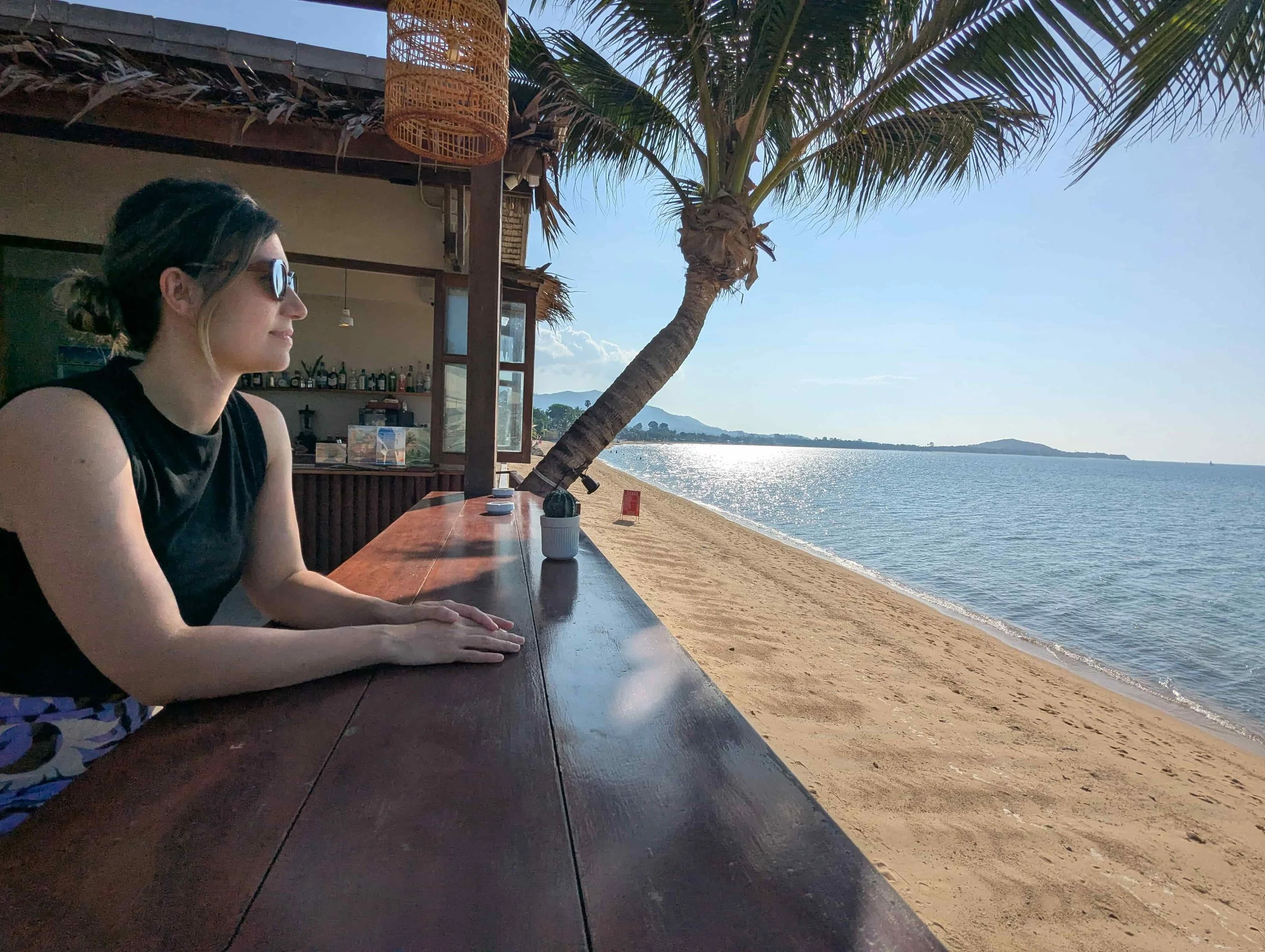
Things Nomads Do is a travel and lifestyle blog for digital nomads and remote workers. I'm a Dutchie based in Bangkok, and I work as a CX consultant alongside running the blog. I love writing about travel, food, living abroad, and my love for the location independent lifestyle.
By the time I hit that first $1,000 month, I was getting around 20,000 unique visitors a month. Traffic matters for some income streams (display ads and affiliates especially) but less than you'd think for others — a blog with 5,000 highly engaged readers can out-earn a blog with 50,000 casual ones if the monetisation is right.
I didn't reach $1,000 through one single thing. I reached it because half a dozen small-to-medium income streams started maturing at the same time. Here's what they were:
1. Affiliate Marketing — The Foundation
Affiliate marketing was the first income stream I set up and, over time, became the most consistent. The idea is simple: you include a special link to a product or service in your blog post, and if a reader clicks through and buys or books, you earn a commission — at no extra cost to them.
For a travel blog, the affiliate opportunities are genuinely good. There’s plenty of affiliate networks that you can sign up to and usually it’s really easy to set things up.
Here are some of the platforms I use:
Travelpayouts is the one I'd recommend to any travel blogger starting out. It's an affiliate network that brings together Booking.com, GetYourGuide, Klook, Aviasales, Rentalcars, and dozens more travel brands under one dashboard — so instead of signing up for ten different affiliate programmes individually, you manage it all in one place. The platform is really easy to use, payouts are reliable, and the travel niche fit is obvious. If you want to start somewhere, start here. They also have an AI tool called “Drive” which automatically adds affiliate links to your website. Ever since I turned it on, my affiliate bookings have increased quite a bit.
SafetyWing is my other major affiliate partner. As a digital nomad blog, travel insurance recommendations are a very strong fit — and SafetyWing's Nomad Insurance product is genuinely what I recommend to people, because it’s also what I use myself. The affiliate commission is competitive, and because it's a subscription product (readers pay monthly), you can earn recurring commissions over time rather than a one-off click. For example, I have a full SafetyWing review on the blog which drives a portion of these commissions. I also want to mention their excellent account management; my account manager often sends me tips and recommendations on what to improve on my blog posts about SafetyWing, and also let’s me know if I’m eligible for a bonus.
Other affiliates: I also work with affiliates such as Saily (eSIM), NordVPN. These are embedded naturally throughout destination posts — such as hotel recommendations, activity suggestions, SIM card tips.
What actually drives affiliate income: It's not just about having the links. It's about having the right links in the right posts at the right moment in the reader's journey. A link to Klook activities in a "best things to do in Seoul" post converts much better than the same link buried in a general travel tips article. Placement, context, and personal experience are everything.
In a good month, affiliate income across all platforms covers somewhere in the low-to-mid hundreds of dollars. It's rarely a spike — it's a slow, steady build that grows as your old content keeps ranking and new posts go live.
—
Tip: When embedding an affiliate link, make sure to add a reference to the specific article or post to the link - this way, you can track which posts are making you the most money! I’m just sharing this because in the first couple of years, I forgot to do this 😅
2. Sponsored Posts — The Fastest Way to Earn Per Piece

A sponsored post (also called a guest post) is when a brand or agency pays you to post or write a piece of content that features their (client’s) product, service, or destination. The content lives on your blog permanently and (usually) includes a follow link back to their site or their clients site.
I charge between $150 and $250 per sponsored post, depending on the brand, the scope of the brief, and how much creative work is involved. For a blog in the digital nomad / travel space with 25k monthly visitors, this is a realistic and sustainable rate.
Usually, the content is already written and you just need to publish it on your blog. I sometimes do a little editing too. If you also create travel videos, you can use a video editor to polish your footage before sharing it alongside your blog content.
When they ask if you would write it, I would charge more for the sponsored post. And needless to say, the content should always fit the theme of my blog and I refuse content about topics like gambling, drugs or similar themes.
Another thing I do: disclose that it is a sponsored post. Readers appreciate the honesty, and it's also legally required in most markets — in the EU, the US, and the UK, failing to disclose paid partnerships is a regulatory issue, not just an ethical one.
At $150-250 per post, you don't need a huge volume to make a meaningful contribution to that $1,000 target. Two or three well-placed sponsored posts in a month adds up quickly alongside other streams.
3. Link insertions
Link insertions are when a brand or agency pays you to add a link to an existing, already-published post on your blog. Rather than creating new content, you're adding a line or two — or naturally weaving in a mention — to an article that's already ranking.
I'm selective about which links I accept. I only insert links that are genuinely relevant to the post's topic and wouldn't look out of place to a reader. Link insertions into a coffee guide about, say, a tea ceremony experience — fine. A cryptocurrency exchange link shoehorned into a packing list — hard no.
I charge less for link insertions - around 60-100 USD. But they are an easy way to get some extra money for very little effort.
4. Brand Collaborations — Partnering With Brands You Actually Use
Beyond individual sponsored posts, there's a category of deeper brand partnerships — where a brand becomes more of an ongoing presence on the blog rather than a one-off commission or sponsored piece.
SafetyWing is a good example for me. As a digital nomad travel insurance product, it's relevant to almost every post I write. I use it myself as well. So the relationship goes beyond just an affiliate link — it's a product I'm happy to talk about naturally, and that trust shows in the content.
Brand collaborations at this level can take different forms: a flat-fee content partnership, a longer-term ambassador arrangement, or a combination of affiliate commissions and bonus payments for ad hoc blog or social media content. The income varies widely depending on the brand and the scope.
I don’t have any specific recommendations for brand partnerships other than this one: the blogger actually uses the product. Readers can tell the difference between a genuine recommendation and something retrofitted onto a post to make a fee.
Hotel collaborations
I’ve done a few hotel collaborations over the years, such as with this luxury hotel in Phuket, but I believe they are not nearly as easy or sustainable as the other collaborations I’ve mentioned. Also because I have quite a small social media following, I think hotels are not eager to pay for a collaboration with me specifically.
But honestly, it could also be that I haven’t fully ‘unlocked’ this kind of collaboration - I’ve read about plenty of other bloggers who were able to get multiple hotel collaborations and also charge a fee on top of the complimentary stay.
This kind of arrangement does have two benefits: it gives me first-hand content for my blog and other channels, and it builds a portfolio of hospitality collaborations that makes it easier to approach the next property.
6. Display Advertising
Display ads were the last income stream I activated, but this is one that needs more traffic to get a decent income stream. I recently joined Journey by Mediavine, which is Mediavine's programme for growing publishers. Mediavine is one of the most respected ad networks for content creators — they pay well, have a genuine focus on publisher interests, and their ads don't wreck the reading experience.
With around 20,000 monthly visitors, I'm not yet in the high-earning tier — display ad income at this traffic level tends to sit in the lower end of the range, a meaningful contribution but not a dominant one. The reason to set it up anyway is the compounding effect: ad income scales with traffic, and traffic compounds over time. Every post I publish now is also generating passive ad revenue, which it couldn't before I joined.
If you're earlier in your blogging journey, the threshold to join Mediavine full is 50,000 monthly sessions. Journey is their entry programme and is worth applying to as soon as you can — the sooner you're in, the sooner the passive income starts accumulating.
What made the difference for me
Looking back at the month I first crossed $1,000, a few things stand out:
Older posts doing the heavy lifting - A lot of the affiliate income that month came from posts I'd written years earlier. SEO compounds — I’ve found that posts don't peak the week I’ve published them. They peak 6-18 months later when Google trusts them. This means the work you do now pays off much later.
Optimising SEO in my posts - SEO is so very important for a blogger - it’s how people find you on the SERP’s (Search Engine Result Pages). Most of my traffic comes from Google. I use a tool called SEO Space, which checks my content and gives recommendations on what to improve in terms of SEO.
Not relying on any single stream - If I'd only had affiliate income, or only sponsored posts, I'd still be nowhere near $1,000. The milestone came from different streams. Diversification isn't just a risk management strategy — it's how blogs actually hit meaningful income targets.
Only accepting collaborations that I believe in and fit my theme - I turned down a few sponsored posts that didn't fit — the wrong niche, the wrong brand, a brief that would have required me to write something I didn't believe. Every time I've said no to something misaligned, I've been glad. In the long run, I do believe readers will keep reading if they know your voice is authentic and reliable.
Posting consistently - When it comes to blogging, consistency is key. You got to churn out a few articles a month at least; especially at the beginning of your blogging journey, to build your presence online. Updating old posts regularly is also really important and can boost your SEO tremendously, and therefore also your blogging income.
Related Blog Posts:
—
Note: Some of the links in this article are affiliate links. This means that, if you buy through my links, I may earn a small commission that helps me create helpful content for the blog and it won’t cost you anything extra either, so it’s a win-win! I only recommend products if I think they will add value, so thanks for supporting Things Nomads Do!