The Honest Truth About the Digital Nomad Lifestyle (After 8 Years)
Freedom. That's what you usually hear as the most-cited benefit of being a digital nomad. And it's certainly true for many aspects of a location-independent lifestyle. What other words come to mind? Flexibility, independence, adventure, courage.
But also: uncertainty, loneliness, and unstable wifi connections.
I've been a remote worker for more than 8 years, traveling to many places around the world and living in both Spain and Thailand. In this article, I want to reflect on my location-independent lifestyle — what I've noticed over the years in my work, my relationships, and beyond. What's genuinely great about this kind of life, and what can be genuinely difficult?
If you're thinking of becoming a digital nomad, my partner also wrote a great piece on why he made the leap — worth a read.
A quick note before you continue: for most of my remote working life, I haven't really fit the traditional definition of a digital nomad — someone who moves every couple of months with no home base. After a year of doing that, I found it too stressful. I'd rather have a home base and travel for a few months a year than be permanently on the move. I think most remote workers eventually land on a similar balance, though plenty of full-time nomads would disagree — and that's completely valid.
Work and Career
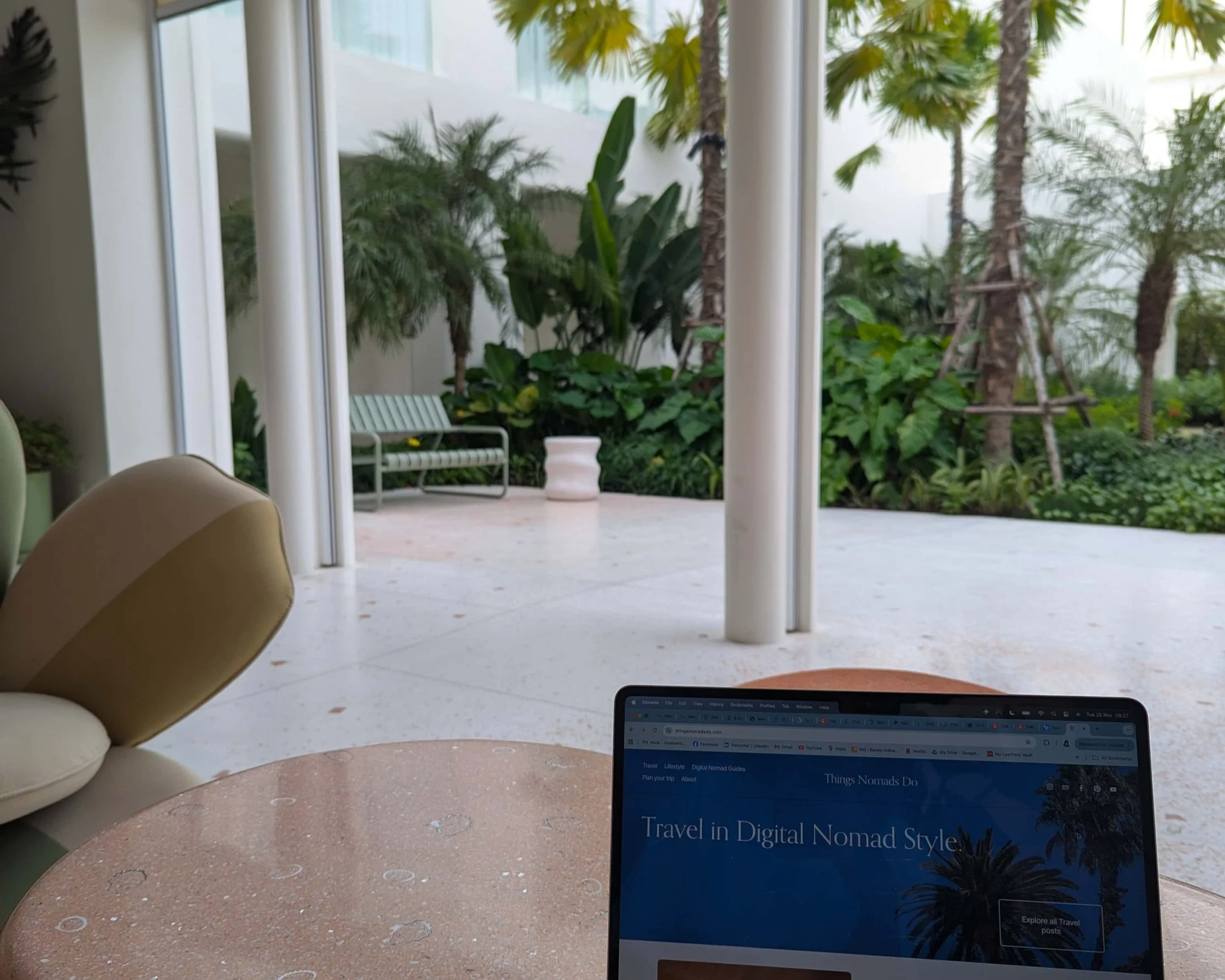
I want to start with the thing that made this lifestyle possible: my job. I'm fortunate to work for an employer that genuinely understands remote work and trusts that a distributed team can be just as productive — if not more — than one working on-site.
There are different ways to work as a digital nomad: you might work for a fully remote company, freelance for multiple clients, or run your own business. Over the years I've heard so many interesting stories about how people made the transition, and there's no single path.
Having worked fully remote for more than 7 years — starting well before COVID made it mainstream — I watched as everyone was suddenly forced into it, and saw how that period shifted attitudes. Many businesses genuinely embraced it. But in recent years, the pendulum has swung back, with companies calling employees back to the office full-time or in a hybrid model. If you're curious about where I think this is all heading, I wrote about the future of remote work for Nomad Magazine.
Where I changed my mind
There's one aspect of remote work I've genuinely reconsidered over the years. I used to think working from anywhere was the obvious ideal — something everyone would want given the choice. That made sense for me personally; I found office life draining and hated being required to show up five days a week. But after COVID, several friends told me they'd been miserable working from home and missed the energy of being around colleagues.
I'd never want a traditional office job again. But I've come around to thinking that having the option to go into an office — to have lunch with colleagues, to feel that social buzz — is probably the healthiest model. The key word is option. Offered, not imposed.
Health and Lifestyle
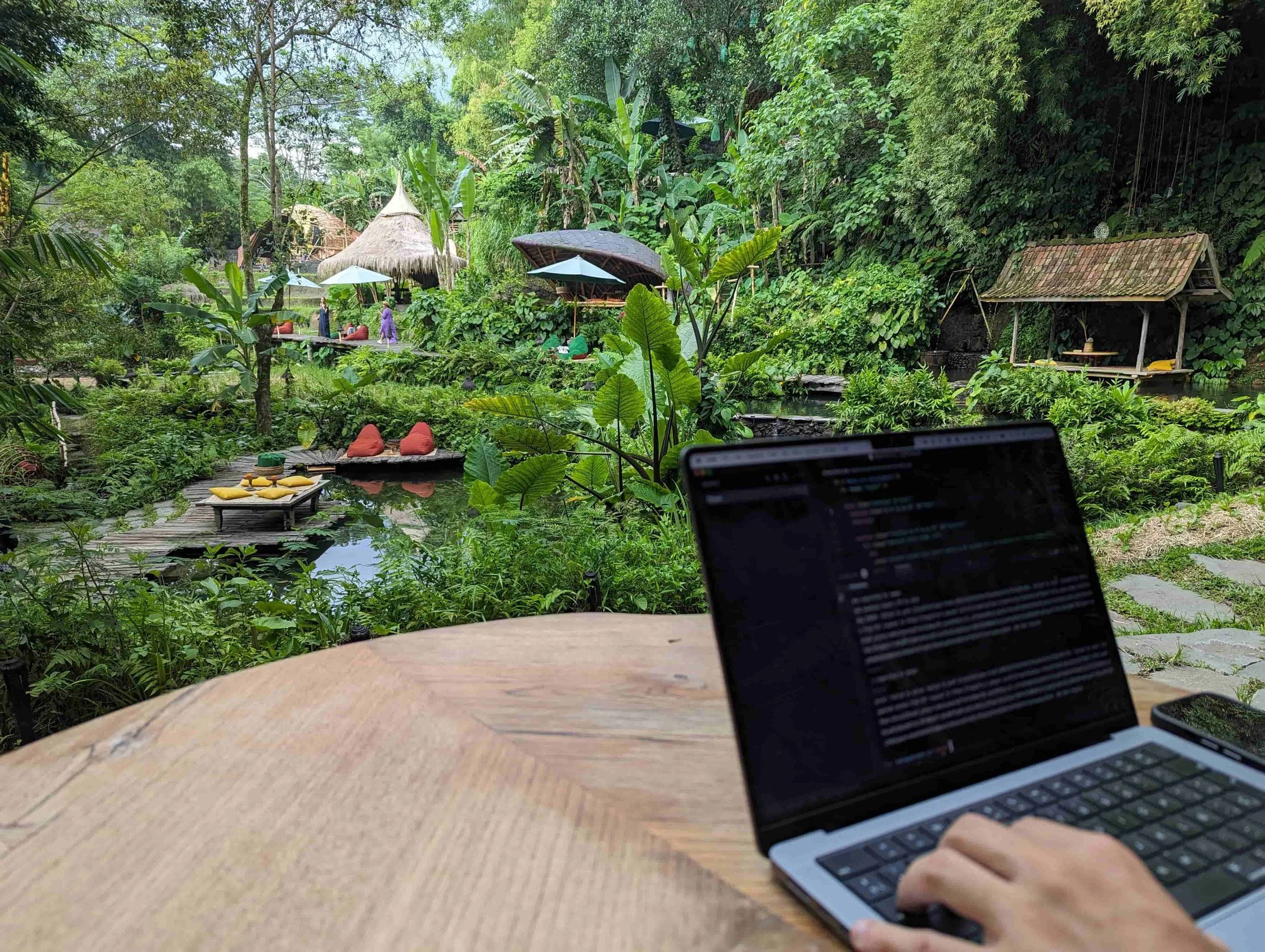
Flexibility in work means flexibility in how you take care of yourself. You can exercise when it suits you, structure your day around your energy, and step away when you need to. What I particularly enjoy is working when I actually feel productive rather than being expected to perform on a fixed schedule. The irony, in my case, is that I'm most productive between 8am and 3pm — perfectly conventional office hours — but knowing it's a choice rather than an obligation makes a real difference.
For others who naturally hit their stride in the evenings, remote work is genuinely transformative. It all comes down to your chronotype.
There are smaller benefits too — like being able to schedule a doctor's appointment without the usual logistical gymnastics.
The main health downside is mental: loneliness. Some people, especially extroverts, need social energy to feel motivated and inspired. If you work remotely and don't actively seek out community — coworking spaces, meetups, regular social plans — it can quietly take a toll.
Relationships
When it comes to friendships, I've found it's genuinely easy to meet people if you're somewhere that attracts like-minded travellers. The harder part is that the people you connect with most likely share your love of moving around — which means they'll probably leave again. When you've uprooted your own life once, doing it again feels easy.
I used to find that sad. Over time, I've noticed that those people tend to resurface in other cities, and friendships pick up naturally where they left off. There's also something quietly valuable about being forced to put yourself out there and build new connections repeatedly. It strengthens a kind of social muscle that stays with you. Many people who've never lived abroad keep the same close circle their whole lives — which has real warmth and continuity to it — but I think it can also breed a certain complacency. Constantly meeting new people keeps you curious and broadens how you see the world.
Traveling with a partner
I've spent most of my nomadic life traveling with a partner, so I can only speak to that experience directly. Being single as a digital nomad isn't worse — it's just different, and probably requires more intentionality around seeking out community so you don't end up isolated.
Traveling as a couple has obvious upsides: you have someone in your corner when things get difficult, and you share the adventure. But spending almost 24 hours a day together, in unfamiliar places, is also a real test of a relationship. Good communication matters more than usual, and so does making sure you each have your own space, your own interests, and moments that are entirely your own.
Slow Travel
Traveling extensively as a digital nomad means practicing what I'd call slow travel — staying somewhere for months rather than weeks, long enough to build a routine, to feel the rhythm of a place, to have a favourite café. Each destination becomes a small home. You create little pockets of familiarity scattered across the world, and they stay with you.
You also start to notice that everywhere can feel like home. That people, fundamentally, are just people. That you'll find warmth and difficulty in equal measure almost anywhere you go.
Living in a different country — not just visiting, but actually living — changes your thinking in ways that are hard to fully articulate. You go back to where you grew up and it feels different. Not worse, necessarily. Just different. Smaller, sometimes. More complicated.
Where is home?
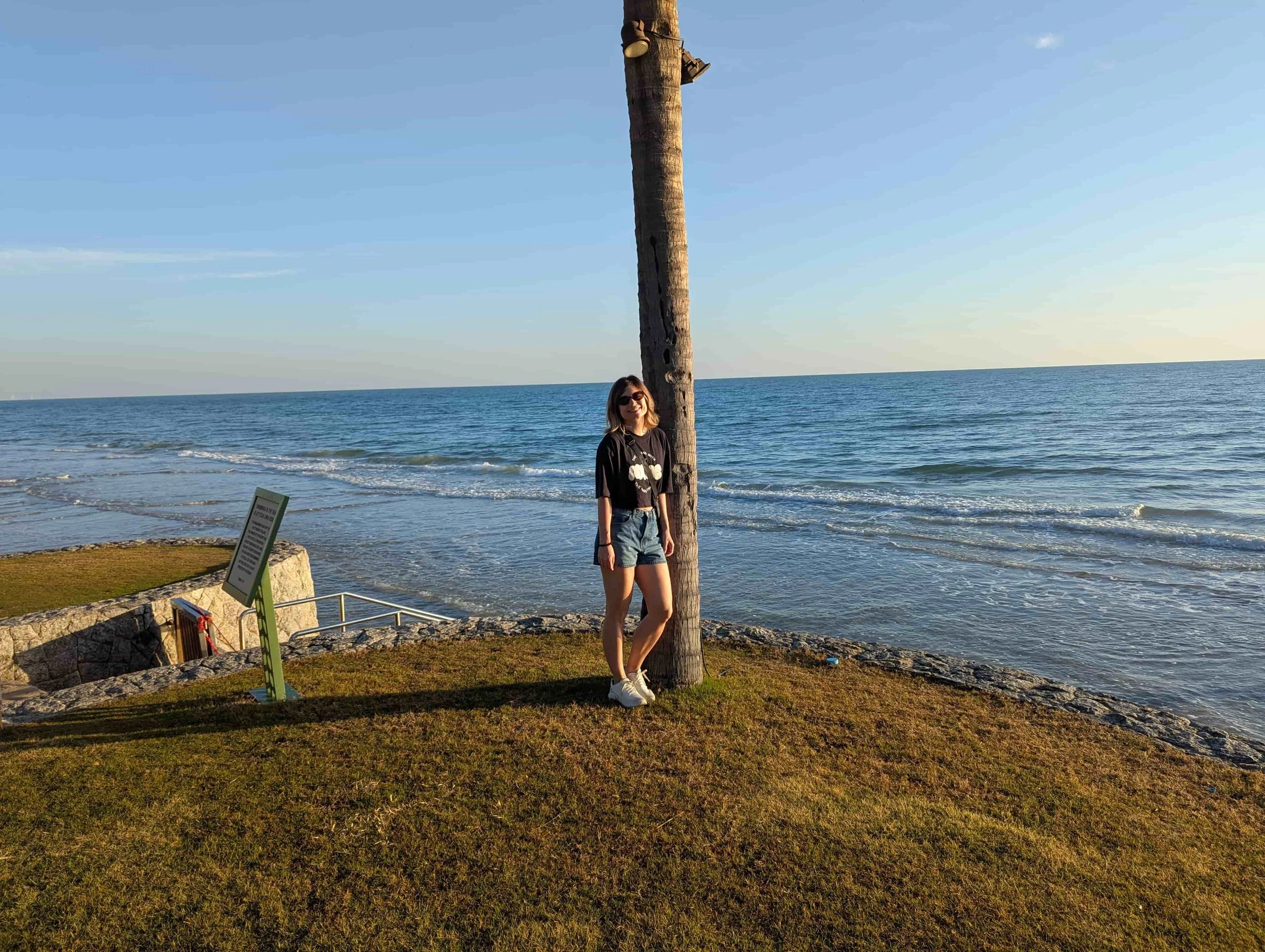
For me, home has become more of a feeling than a place. It's the people around you. The local café you return to every morning. The city where you feel like yourself.
What I've also learned is that home isn't fixed. I felt completely at home in Spain for six years — and then, gradually, I didn't. That's part of why I moved to Bangkok. It taught me that your needs and priorities shift in ways you can't always anticipate, and that life has a way of taking you somewhere you never planned to be. Which is, honestly, most of the appeal.
I feel genuinely fortunate to have been able to work this way — to have lived in different countries, explored so many places, and built a life that keeps surprising me. I wouldn't trade it.
The nomad life doesn't give you certainty. It gives you something better: proof that you can build a home almost anywhere, and the curiosity to keep looking for the next one.
🔖 Resources for Digital Nomads:
Over the years, I have done a lot of trials and errors, also when it comes to tools and resources. Here’s a quick list of tools that have helped me significantly as a digital nomad:
Nord VPN- I always use NordVPN which is super reliable, making sure you have a safe connection anywhere you go.
Set up US LLC - Easily set up your US LLC with NorthWest Registered Agent
Insurance SafetyWing- My go to travel and health insurance combines, specifically tailored for digital nomads and remote workers
Wise card - Avoid ATM transaction fees and pay in a local currency with a Wise card
Saily eSim card - Get 10% off your first Saily plan with the code TND10
Related blog posts
Note: Some of the links in this article are affiliate links. This means that, if you buy through my links, I may earn a small commission that helps me create helpful content for the blog and it won’t cost you anything extra either, so it’s a win-win! I only recommend products if I think they will add value, so thanks for supporting Things Nomads Do!