From Thailand to Mexico to Portugal: How eSIM Travel Works Across Continents
Three Countries, One Common Travel Headache
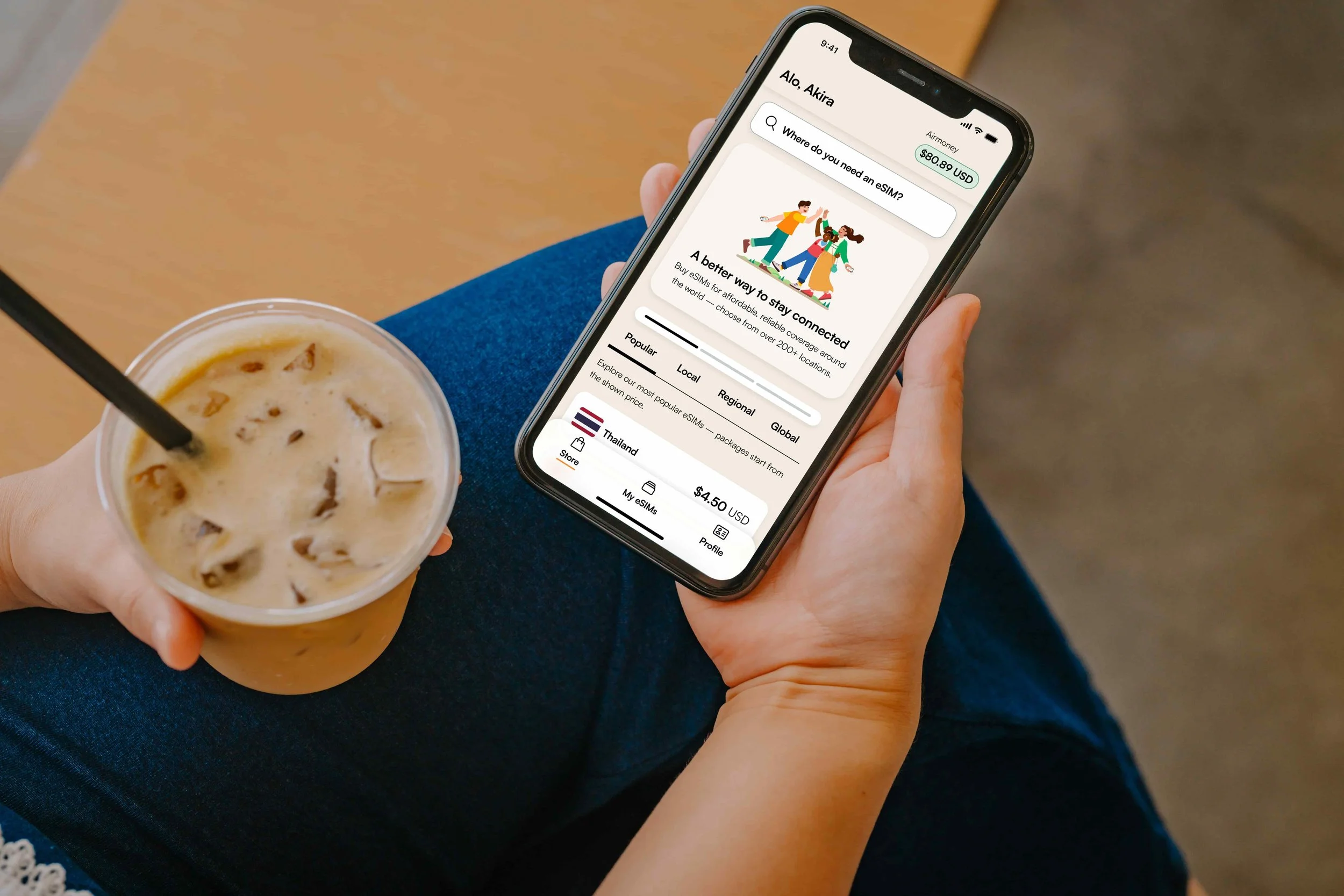
There's a particular kind of stress that hits the moment you step off a long-haul flight, exhausted, dragging your suitcase behind you, and realize your phone shows no signal at all. You can't call your hotel. You can't pull up the map to figure out which exit leads to the taxi stand. You can't even message the friend who was supposed to meet you at arrivals. For something so small, a dead phone in a new country has a way of turning excitement into panic within minutes.
This scenario plays out every single day in airports around the world, whether someone is landing in Bangkok, Cancun, or Lisbon. Three completely different countries, three completely different cultures, yet the exact same problem. And for years, the solutions on offer weren't particularly good. Either you paid your home carrier's eye-watering roaming rates, or you spent your first precious hour in a new country standing in line at a phone kiosk trying to communicate with a vendor about which SIM card actually works with your phone.
Thankfully, that's no longer the only choice. Travelers heading to Southeast Asia, Latin America, or Europe now have a far simpler option that takes care of connectivity before the plane even takes off.
Why Thailand Deserves Special Attention When It Comes to Connectivity
A Country Built for Constant Movement
Thailand is one of those destinations where you genuinely need your phone working from the second you arrive. Bangkok's traffic is legendary, and ride-hailing apps like Grab have basically replaced hailing a taxi on the street. Without data, you're stuck trying to negotiate fares in broken English or hoping a driver understands where you're pointing on a paper map.
Then there's the food. Some of the best meals in Thailand come from street stalls with no signage in English, no menu translation, and definitely no Wi-Fi. Being able to pull up a translation app or check reviews on the spot makes the difference between confidently trying something new and walking past it nervously.
For anyone planning a trip there, setting up an eSIM Thailand plan before departure solves all of this in one move. You land, your phone connects automatically, and you're immediately able to book a ride, find your hotel, and start exploring without wasting your first day on logistics. Given how spread out Thailand's attractions are — from the temples of Chiang Mai to the islands in the south — staying connected isn't a luxury here, it's practically a necessity.
Beyond the Big Cities
It's worth noting that connectivity matters just as much once you leave Bangkok behind. Travelers heading to smaller islands or rural areas in the north often assume coverage will be patchy, but Thailand's network infrastructure has improved dramatically over the past several years. A solid data plan set up before you leave home means you're covered whether you're navigating the chaos of Khao San Road or hiking near Pai.
Mexico: A Destination Where Data Means Safety, Not Just Convenience

More Than Just Staying in Touch
Mexico is a country that rewards spontaneity. Some of the best experiences come from wandering off the obvious tourist track, finding a quiet beach, or discovering a small town that wasn't even on the original itinerary. But that same spontaneity becomes risky without a reliable way to get directions, check distances, or call for help if something goes wrong.
This is where having a dependable Mexico eSIM plan genuinely changes the travel experience. Whether you're driving along the coast of the Yucatan Peninsula, exploring Mexico City's sprawling neighborhoods, or taking a colectivo between towns, having data on hand means you can navigate confidently, verify that a destination is open before showing up, and stay in contact with travel companions if your group splits up for the day.
There's also a practical safety angle here that often gets overlooked. Being able to quickly check your location, call a verified taxi service, or look up the nearest pharmacy or hospital matters far more when you're in an unfamiliar country than most travelers realize until they actually need it.
The Currency and Payment Angle
Mexico has also moved heavily toward app-based payments and currency conversion tools in recent years. Many travelers now rely on their phones to check real-time exchange rates before paying for something, or to use digital payment apps that local vendors increasingly accept. None of that works without a stable data connection, which makes setting up your eSIM well before arrival one of the smarter pieces of trip prep you can do.
Portugal: Europe's Quiet Favorite, Made Even Better With the Right Setup
A Country That Rewards Exploration
Portugal has quietly become one of Europe's most loved destinations, and it's easy to see why once you're there. Lisbon's hills and tiled buildings, the surf towns along the Algarve coast, and the wine valleys of the Douro region all offer something different, often within just a few hours' drive of each other.
What makes Portugal particularly interesting from a connectivity standpoint is how much ground travelers tend to cover during a single trip. It's common to start in Lisbon, head south to the coast, then loop back north toward Porto, all within a week or two. That kind of movement across regions makes having a reliable eSIM Portugal plan especially useful, since you're not relying on hotel Wi-Fi that disappears the moment you step outside.
Small Towns, Big Connectivity Needs
Some of Portugal's most charming spots are smaller towns where English isn't widely spoken and signage can be limited. Having data on hand to translate a menu, check bus schedules, or simply confirm you're walking in the right direction toward that viewpoint everyone recommended online makes these detours far less stressful and far more enjoyable.
What Ties These Three Destinations Together
The Same Solution, Wherever You Land
Thailand, Mexico, and Portugal couldn't be more different in terms of culture, language, food, and landscape. But the underlying travel challenge is identical in all three: arriving in a new country and needing reliable internet access immediately, without overpaying or wasting time figuring it out on the ground.
This is exactly why eSIM technology has become so popular among frequent travelers. Instead of researching SIM card vendors in three different countries, dealing with three different purchase processes, and potentially three different languages at the counter, you can set everything up from your phone before you even leave home. Each destination gets its own dedicated plan, activated and ready the moment you land, with no physical card to lose or swap out mid-trip.
A Small Step That Changes the Whole Trip
The biggest mistake travelers make isn't picking the wrong destination or the wrong itinerary — it's leaving connectivity as an afterthought. Spending fifteen minutes before your flight setting up a data plan for wherever you're headed pays off the moment you land, when you're not standing in an arrivals hall trying to figure out your next move with a phone that has no signal.
Whether your next trip takes you through the temples of Chiang Mai, the beaches of Tulum, or the cobblestone streets of Porto, the same simple principle applies. Sort out your connection before you go, and you get to spend your time actually experiencing the place instead of troubleshooting your phone.
Related Blog Posts:
Note: this content is provided by a partner